
We are inspired by:
-

Yuval Noah Harari
Yuval Noah Harari is an Israeli historian, philosopher, and author of best-selling books about human history and technology.
He's a professor at the Hebrew University of Jerusalem and known for his thought-provoking perspectives on human history. Harari's work examines the relationship between history and biology, and the differences between humans and other animals.
-

Melanie Kaye/Kantrowitz. 1945-2018
Writer, scholar, and activist Melanie Kaye/Kantrowitz died last month, on July 10, after a long battle with Parkinson’s. She was 73 years old.
As an eloquent and incisive poet and essayist, Melanie played a pivotal role in the women’s movement, and the movements for LGBT rights, against racism and anti-Semitism, and for Palestinian rights. Among her most galvanizing ideas was what she called “radical diasporism,” an update of the Jewish Labor Bund’s notion of doykayt (“hereness”).
-
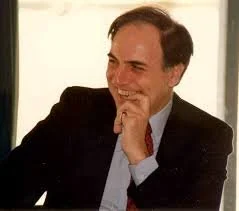
Sherwin Wine. 1928-2007
Sherwin Theodore WineShimon ben Tzvi was an American rabbi and a founding figure of Humanistic Judaism, a movement that emphasizes Jewish culture and history as sources of Jewish identity rather than belief in any gods.[1][2] He was originally ordained as a Reform rabbi but later founded the Birmingham Temple, the first congregation of Humanistic Judaism, in 1963.
-

“How can we prepare ourselves and our children for a world of unprecedented transformations and radical uncertainties…Many pedagogical experts argue that schools should switch to teaching ‘the four Cs’-critical thinking, communication, collaboration, and creativity.”
-
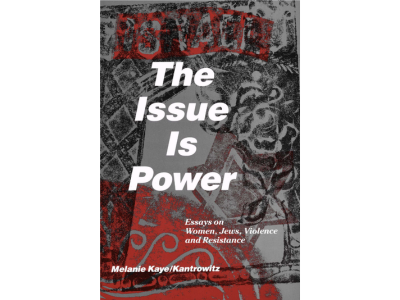
“…in the context of a vigorous movement for women’s liberation, women began to change our consciousness about rape and other sexual violence so that we would no longer accept these things as natural events.”
-

“The purpose of a humanistic Jewish school is to help its students become more cooperative, more generous, more self-reliant and more rational – using whatever is relevant in the Jewish experience to reinforce these values.”
-
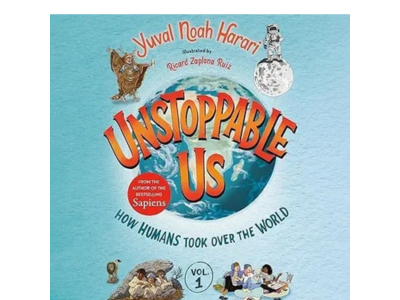
“I’ve tried to take the bigger lessons from Sapiens and tell them in an accessible way. When we write for adults we can get behind big complicated sentences. For children, it is different. In fact, many people who read Sapiens wrote to me and asked me to write something similar for children. And I really wanted to do it too.” — Yuval Noah Harari
“Unstoppable Us has one key message for kids: the world in which we live didn’t have to be the way it is. People made it what it is. And people can change it.” — Yuval Noah Harari
-
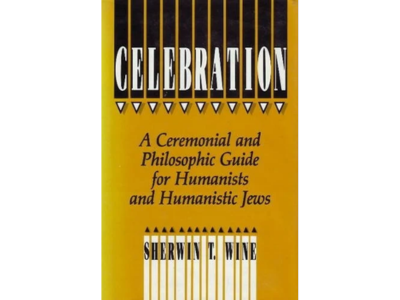
“This book can be used in several ways. It can be a meditation book for private reflection. Readers can learn about humanism and Jewish humanism. They can clarify their own convictions. They can renew their commitment to a humanistic lifestyle.
It also can be a celebration for public meetings and services. The prose poetry and song themes are intended to provide opportunities for inspiration and community solidarity. Both ordinary and special occasions are included.”
-
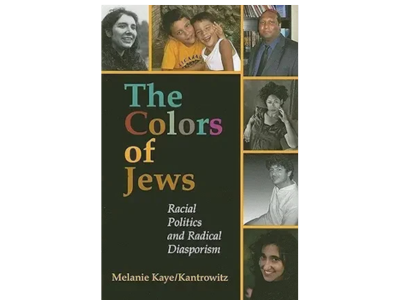
“Are Jews white? …First assumption, there was one answer for all Jews. Second, the answer was either yes or no: Jews were white or of color. Third, whatever catagory one chose to file Jews into was a political decision: Jews were either down with the people of color, innocent and victimized or lumped in with whites, guilty and victimizing.”
-

Collaborative Project Based Learning
“Student learning goals for projects include standards-based content as well as skills such as critical thinking, problem solving, communication, self management, project management, and collaboration.“
-
Reference materials on humanism, feminism and secularism.
The secular humanistic ecosystem




The City Congregation for Humanistic Judaism